
What craft beer equipment is best for micro breweries?
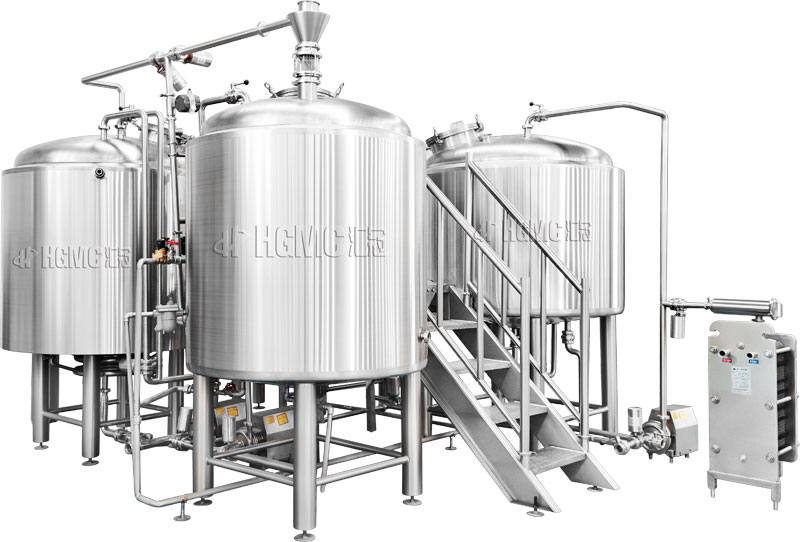
For micro craft breweries, choosing the best craft beer equipment is like an explorer carefully selecting every piece of equipment that is both functional and lightweight. It directly determines whether you can find the perfect balance point between flavor innovation and commercial survival. The core lies in matching production capacity and flexibility. An ideal starting point is to select an integrated brewery system with a batch of 1-5 barrels (approximately 117-585 liters). Such systems typically occupy only 20 to 50 square meters of space, with an initial investment controlled between 600,000 and 1.5 million RMB, yet they can support an operational scale with an annual output of 100 to 500 kiloliters. According to a 2022 survey by the American Brewers Association, micro-breweries that adopt pre-configured integration systems can shorten the equipment installation and commissioning cycle by 40%, with an average of only three months required for production. This saves over 200 hours of integration time compared to purchasing equipment separately, allowing entrepreneurs to focus more than 85% of their energy on formula research and development and market expansion.
In terms of specific equipment configuration, the intelligent control of saccharification and boiling equipment is the cornerstone of quality. It is recommended to use an integrated saccharification and boiling pot with a double-layer jacket and automatic temperature control function. The heating power density is suggested to reach 12-15 kilowatts per 100 liters, which can stabilize the heating rate at 1°C per minute and ensure that the starch conversion efficiency is increased to over 90%. For the fermentation stage, it is crucial to configure stainless steel fermentation tanks with conical bottoms and temperature control accuracy within ±0.5°C. For instance, the "Wilderness Country" distillery in Chengdu upgraded its core craft beer equipment in 2023. It selected four fermentation tanks with a capacity of 10 tons and combined them with an automatic CIP (in-place Cleaning) system, reducing the batch turnover time from 21 days to 16 days and increasing the capacity utilization rate by 24%. At the same time, the water consumption for cleaning was reduced by 35%, significantly lowering the operating costs.
 Return on investment and cost control are the lifelines of micro-wineries. For a set of high-quality craft beer equipment, the design life of its core components should exceed 15 years. A wise strategy is to allocate approximately 60-70% of the total investment to core production units such as saccharification, fermentation and cooling. Market analysis indicates that plate heat exchangers with high-efficiency designs can reduce the cooling time of wort from 60 minutes to 25 minutes and recover 80% of the heat energy for hot water production, lowering the energy cost per batch by approximately 30 yuan. Take a micro-distillery in Xiamen with an annual output of 200 kiloliters as an example. Through precise calculation, it selected a high-quality domestic filling machine with high cost performance. Although the price of a single machine is 40% lower than that of imported brands, about 80,000 yuan, combined with strict process management, the filling efficiency can still reach 600 bottles per hour, and the wine loss rate is controlled at an excellent level of 2.5%. Shorten its payback period to 18 to 24 months.
Ultimately, what often determines long-term competitiveness is the flexibility and expansion potential of the equipment. Modular design is the current mainstream innovation, allowing wineries to expand the number of fermentation tanks from 4 to 8 in the future at an additional cost of approximately 20%. A system that supports multi-way valve arrays and automated control enables winemakers to process a batch of stouts and IPAs simultaneously within a day, increasing product diversity by 50%. Industry research shows that micro-wineries with basic automated control (such as PLC programming) have product flavor consistency (measured by the variance of blind test scores by professional tasting teams) that is more than three times that of wineries operated purely manually. This is as revealed by the early success of a well-known micro-distillery in Boston, "Trillium" : They invested in specialized equipment that could precisely control the temperature and pressure during dry hops, which increased the freshness and flavor intensity of their signature turbid IPA by approximately 40%, thereby establishing a decisive quality advantage in the highly competitive market. Therefore, the best equipment is not the most expensive one, but rather the loyal partner that can evolve in step with your brewing philosophy and turn every penny of your budget into stable output and unique flavor.
Return on investment and cost control are the lifelines of micro-wineries. For a set of high-quality craft beer equipment, the design life of its core components should exceed 15 years. A wise strategy is to allocate approximately 60-70% of the total investment to core production units such as saccharification, fermentation and cooling. Market analysis indicates that plate heat exchangers with high-efficiency designs can reduce the cooling time of wort from 60 minutes to 25 minutes and recover 80% of the heat energy for hot water production, lowering the energy cost per batch by approximately 30 yuan. Take a micro-distillery in Xiamen with an annual output of 200 kiloliters as an example. Through precise calculation, it selected a high-quality domestic filling machine with high cost performance. Although the price of a single machine is 40% lower than that of imported brands, about 80,000 yuan, combined with strict process management, the filling efficiency can still reach 600 bottles per hour, and the wine loss rate is controlled at an excellent level of 2.5%. Shorten its payback period to 18 to 24 months.
Ultimately, what often determines long-term competitiveness is the flexibility and expansion potential of the equipment. Modular design is the current mainstream innovation, allowing wineries to expand the number of fermentation tanks from 4 to 8 in the future at an additional cost of approximately 20%. A system that supports multi-way valve arrays and automated control enables winemakers to process a batch of stouts and IPAs simultaneously within a day, increasing product diversity by 50%. Industry research shows that micro-wineries with basic automated control (such as PLC programming) have product flavor consistency (measured by the variance of blind test scores by professional tasting teams) that is more than three times that of wineries operated purely manually. This is as revealed by the early success of a well-known micro-distillery in Boston, "Trillium" : They invested in specialized equipment that could precisely control the temperature and pressure during dry hops, which increased the freshness and flavor intensity of their signature turbid IPA by approximately 40%, thereby establishing a decisive quality advantage in the highly competitive market. Therefore, the best equipment is not the most expensive one, but rather the loyal partner that can evolve in step with your brewing philosophy and turn every penny of your budget into stable output and unique flavor.
Return on investment and cost control are the lifelines of micro-wineries. For a set of high-quality craft beer equipment, the design life of its core components should exceed 15 years. A wise strategy is to allocate approximately 60-70% of the total investment to core production units such as saccharification, fermentation and cooling. Market analysis indicates that plate heat exchangers with high-efficiency designs can reduce the cooling time of wort from 60 minutes to 25 minutes and recover 80% of the heat energy for hot water production, lowering the energy cost per batch by approximately 30 yuan. Take a micro-distillery in Xiamen with an annual output of 200 kiloliters as an example. Through precise calculation, it selected a high-quality domestic filling machine with high cost performance. Although the price of a single machine is 40% lower than that of imported brands, about 80,000 yuan, combined with strict process management, the filling efficiency can still reach 600 bottles per hour, and the wine loss rate is controlled at an excellent level of 2.5%. Shorten its payback period to 18 to 24 months.
Ultimately, what often determines long-term competitiveness is the flexibility and expansion potential of the equipment. Modular design is the current mainstream innovation, allowing wineries to expand the number of fermentation tanks from 4 to 8 in the future at an additional cost of approximately 20%. A system that supports multi-way valve arrays and automated control enables winemakers to process a batch of stouts and IPAs simultaneously within a day, increasing product diversity by 50%. Industry research shows that micro-wineries with basic automated control (such as PLC programming) have product flavor consistency (measured by the variance of blind test scores by professional tasting teams) that is more than three times that of wineries operated purely manually. This is as revealed by the early success of a well-known micro-distillery in Boston, "Trillium" : They invested in specialized equipment that could precisely control the temperature and pressure during dry hops, which increased the freshness and flavor intensity of their signature turbid IPA by approximately 40%, thereby establishing a decisive quality advantage in the highly competitive market. Therefore, the best equipment is not the most expensive one, but rather the loyal partner that can evolve in step with your brewing philosophy and turn every penny of your budget into stable output and unique flavor.