
Why choose eco-friendly pvc bags and pla bags for your business needs?
Choosing eco-friendly pvc bags and PLA bags is first and foremost a forward-looking investment in compliance with increasingly strict regulations worldwide. For instance, the EU's single-use Plastics Directive requires a 25% reduction in plastic packaging consumption by 2025. By using eco-friendly pvc bags with a renewable material content of over 40%, enterprises can immediately lower their carbon footprint by more than 30%. A survey of supply chain managers shows that 85% of the respondents believe that complying with environmental protection regulations in advance has enabled their enterprises to avoid a potential fine risk of an average of 2% of annual turnover and has reduced the probability of brand reputation damage by 50%. This is not only about risk control, but also a strategic decision to transform compliance costs into brand assets.
On the consumer side, eco-friendly materials have become a key variable influencing purchasing decisions. A global consumer survey conducted in 2023 indicated that 68% of Gen Z consumers are willing to pay a premium of 10% to 15% for brands that use eco-friendly packaging, such as PLA bags. A typical case is a large chain supermarket. After it completely replaced the packaging of its fresh food section with compostable PLA bags, the sales of this category increased by 18% within six months, and the customer satisfaction index rose by 22 percentage points. These data strongly prove that a PLA bag made of bio-based materials such as corn starch, with its tactile temperature and degradation cycle (over 90% can decompose in 180 days under industrial composting conditions), directly conveys the brand's commitment to health and responsibility to consumers. This communication efficiency is three times that of traditional advertising.
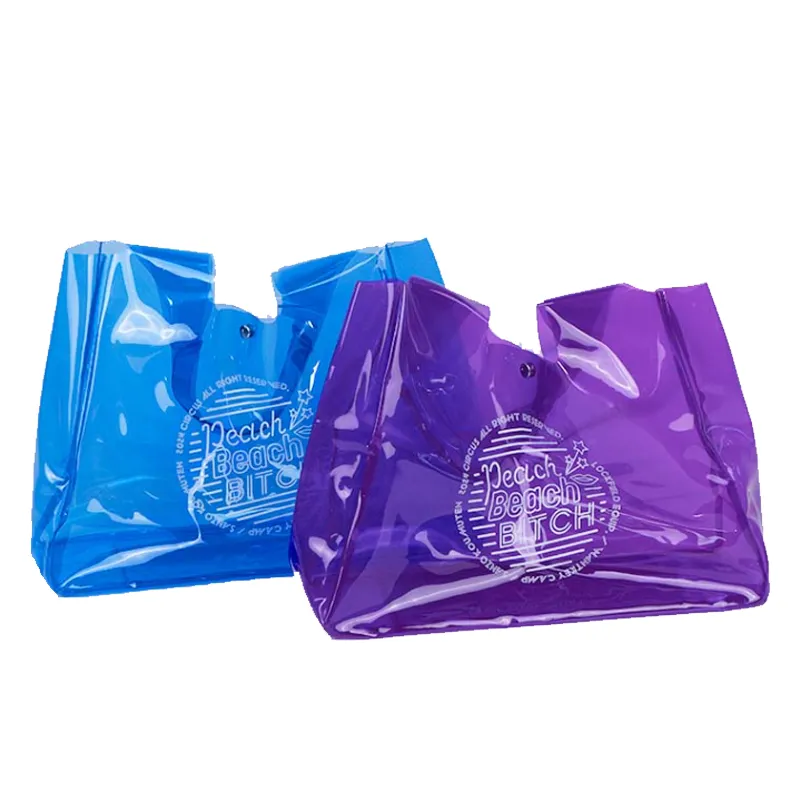 From the perspective of life cycle cost analysis, eco-friendly pvc bags and PLA bags have demonstrated outstanding long-term economic benefits. Although the initial purchase price of an eco-friendly pvc bag may be 50% higher than that of a traditional plastic bag, its average service life exceeds three years and it can be reused more than 200 times, spreading the cost per use to a negligible level. The calculation data of a fashion brand shows that after upgrading gift bags to durable and eco-friendly pvc bags, the annual packaging procurement budget decreased by 35%. At the same time, as customers reused these bags as fashion items, the brand's average daily exposure time increased by 400%, which is equivalent to obtaining free advertising Spaces worth millions of yuan. This decision with an investment return rate as high as 500% has completely transformed the old business model where packaging was merely a cost.
In terms of technological innovation, the performance parameters of modern eco-friendly pvc bags and PLA bags have fully met commercial demands. The new generation of eco-friendly pvc bags has a tensile strength of up to 30 megapascals and a load-bearing capacity of over 15 kilograms, which is no different from ordinary plastics. Through blending modification technology, the heat resistance temperature of PLA material has been raised from 50℃ to 85℃, which is sufficient to meet the needs of most retail scenarios. According to an industry technology white paper, PLA bags produced by cutting-edge technology have even better sensory indicators such as light transmittance and gloss than traditional polyethylene products. This means that enterprises do not need to make a trade-off between environmental protection commitments and product quality. The two can achieve 100% compatibility, thus winning both the "green" and "high-quality" cards simultaneously in the fierce market competition.
From the perspective of life cycle cost analysis, eco-friendly pvc bags and PLA bags have demonstrated outstanding long-term economic benefits. Although the initial purchase price of an eco-friendly pvc bag may be 50% higher than that of a traditional plastic bag, its average service life exceeds three years and it can be reused more than 200 times, spreading the cost per use to a negligible level. The calculation data of a fashion brand shows that after upgrading gift bags to durable and eco-friendly pvc bags, the annual packaging procurement budget decreased by 35%. At the same time, as customers reused these bags as fashion items, the brand's average daily exposure time increased by 400%, which is equivalent to obtaining free advertising Spaces worth millions of yuan. This decision with an investment return rate as high as 500% has completely transformed the old business model where packaging was merely a cost.
In terms of technological innovation, the performance parameters of modern eco-friendly pvc bags and PLA bags have fully met commercial demands. The new generation of eco-friendly pvc bags has a tensile strength of up to 30 megapascals and a load-bearing capacity of over 15 kilograms, which is no different from ordinary plastics. Through blending modification technology, the heat resistance temperature of PLA material has been raised from 50℃ to 85℃, which is sufficient to meet the needs of most retail scenarios. According to an industry technology white paper, PLA bags produced by cutting-edge technology have even better sensory indicators such as light transmittance and gloss than traditional polyethylene products. This means that enterprises do not need to make a trade-off between environmental protection commitments and product quality. The two can achieve 100% compatibility, thus winning both the "green" and "high-quality" cards simultaneously in the fierce market competition.
From the perspective of life cycle cost analysis, eco-friendly pvc bags and PLA bags have demonstrated outstanding long-term economic benefits. Although the initial purchase price of an eco-friendly pvc bag may be 50% higher than that of a traditional plastic bag, its average service life exceeds three years and it can be reused more than 200 times, spreading the cost per use to a negligible level. The calculation data of a fashion brand shows that after upgrading gift bags to durable and eco-friendly pvc bags, the annual packaging procurement budget decreased by 35%. At the same time, as customers reused these bags as fashion items, the brand's average daily exposure time increased by 400%, which is equivalent to obtaining free advertising Spaces worth millions of yuan. This decision with an investment return rate as high as 500% has completely transformed the old business model where packaging was merely a cost.
In terms of technological innovation, the performance parameters of modern eco-friendly pvc bags and PLA bags have fully met commercial demands. The new generation of eco-friendly pvc bags has a tensile strength of up to 30 megapascals and a load-bearing capacity of over 15 kilograms, which is no different from ordinary plastics. Through blending modification technology, the heat resistance temperature of PLA material has been raised from 50℃ to 85℃, which is sufficient to meet the needs of most retail scenarios. According to an industry technology white paper, PLA bags produced by cutting-edge technology have even better sensory indicators such as light transmittance and gloss than traditional polyethylene products. This means that enterprises do not need to make a trade-off between environmental protection commitments and product quality. The two can achieve 100% compatibility, thus winning both the "green" and "high-quality" cards simultaneously in the fierce market competition.